
Physics and Astronomy Club
The focus is an ongoing club in which pupils work at the FUTURA Observatory with real infrastructure, astronomical data and questions close to research.
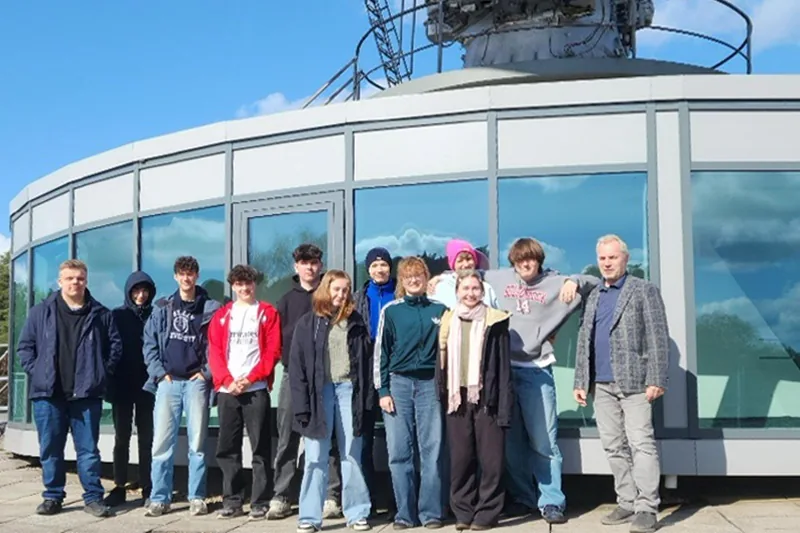
The FUTURA Observatory in Neu Golm connects school-based educational work with real measurement data, radio astronomy and event formats close to research.
Alongside project-based learning formats, the Foundation also supports educational opportunities in a school context. A central element is the Physics and Astronomy Club at the FUTURA Observatory in Neu Golm.
The focus is an ongoing club in which pupils work at the FUTURA Observatory with real infrastructure, astronomical data and questions close to research.

The Foundation works in particular with SFZ Pankow e.V. and other stakeholders in science education.

Safia Ouazi, Alexander Stendal from SFZ Pankow and Dr.-Ing. Andreas Fischer organise the formats and provide expert and didactic support.
The Foundation creates the infrastructural basis for running the events and provides the rooms in which the formats can be implemented.
This creates a lasting framework in which educational work and scientific practice are directly connected.
Since autumn 2025, several radio astronomy formats have been held. They were aimed at pupils from different year groups and connected real data with scientific work.
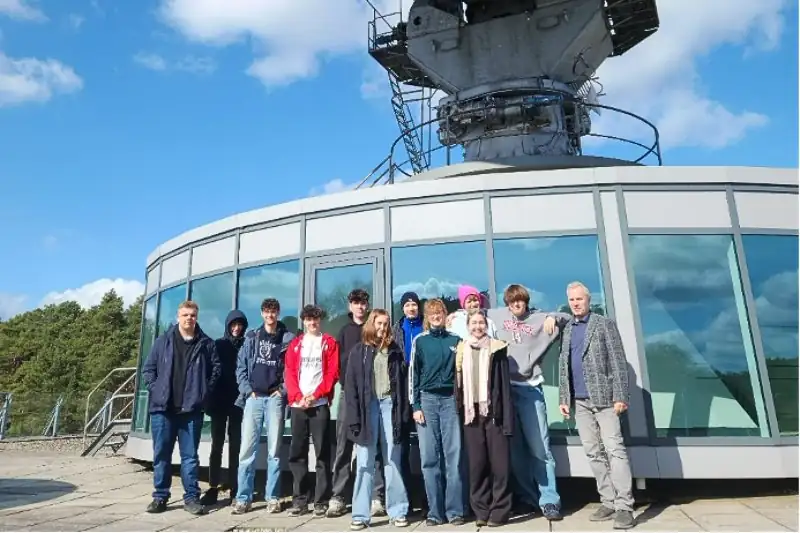
Robert-Havemann-Gymnasium, Berlin
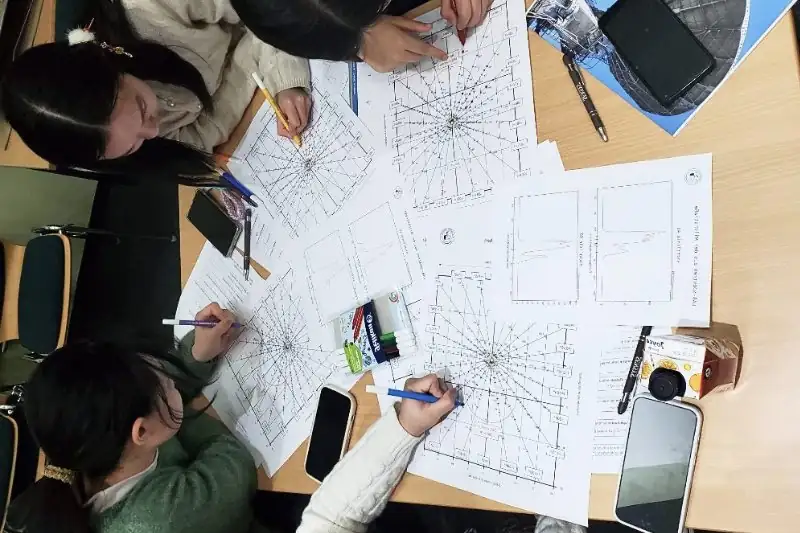
with international participants from a school in Nanjing, China
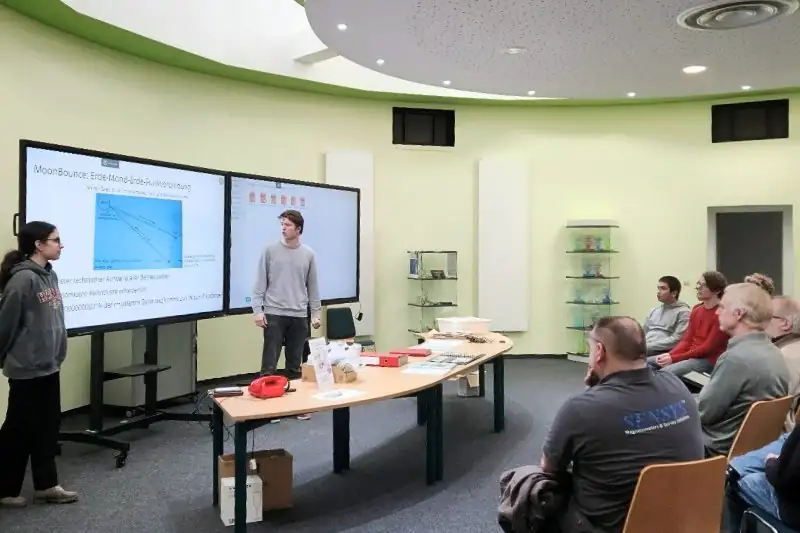
around 45 participants from several schools
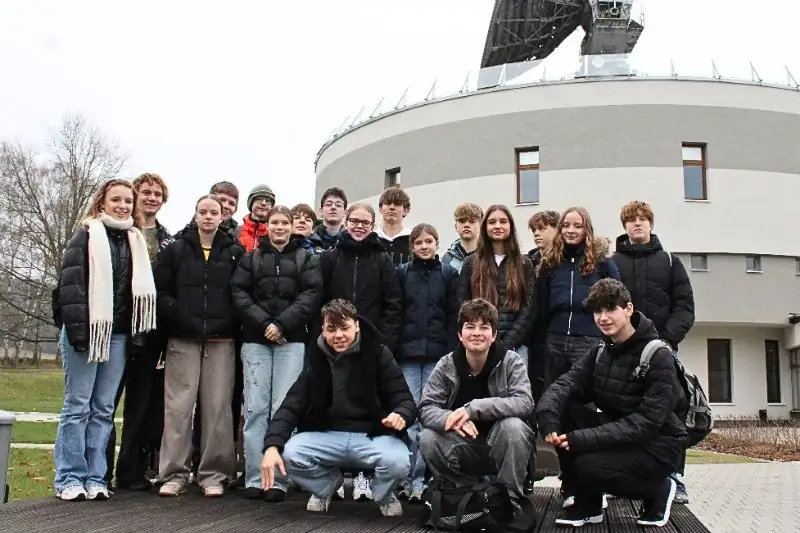
around 20 participants, Robert-Havemann-Gymnasium, Berlin
The events are offered in two formats: as a pupil conference and as a workshop. Both formats connect the history of the site with pupils' own activity and current scientific work.
The tasks are not standard school lesson formats. They are designed in cooperation with Joachim Köppen from the Institute of Theoretical Physics and Astrophysics in Kiel and prepared on a sound scientific basis.
For the work, pupils receive a dedicated radio astronomy booklet with tasks and learning materials. Data analysis, orientation in a coordinate system and astronomical interpretation are translated into a structured learning format.
The combination of an Earth Station tour, real data sets and independent work makes radio astronomy tangible and inspires young people to engage with technology and science.
The educational opportunities are currently being expanded in content. Further task formats are being prepared to link key contributions of radio astronomy with the school curriculum and sharpen awareness of our place in the universe.
The data used comes from measurements taken with a 12-metre parabolic antenna and is prepared didactically so that it can be worked on in a school context.
The content is developed in cooperation with scientific institutions and goes beyond conventional classroom material. Participants gain direct insights into current research approaches.
The connection between practical work, scientific methodology and technical infrastructure promotes a deeper understanding of scientific contexts and shows how research actually works.
The technical development of the facility is also the basis for educational formats and participation in larger research contexts.